Stamped Concrete Spalling: Mixes, Sealers & Long-Term Care
Stamped concrete starting to spall or crack? Learn how modern mixes, sealers, and smart maintenance affect how long your decorative concrete really lasts.
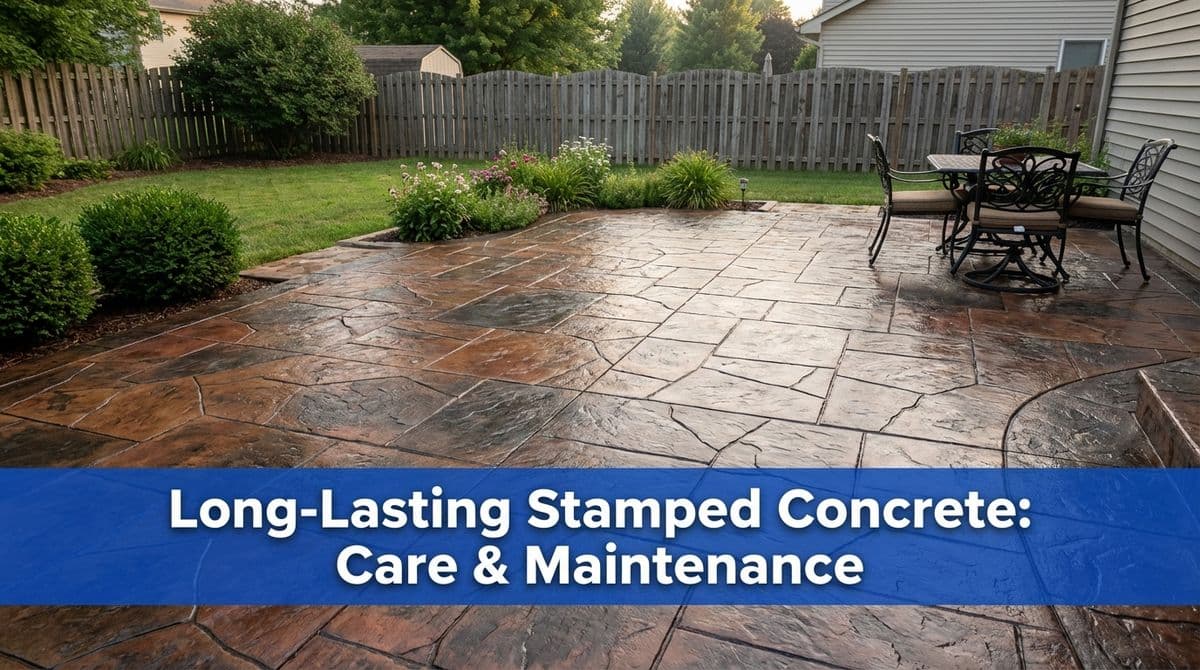
Stamped Concrete Spalling and Cracking: A Real-World Example
We recently got a call from a homeowner — let’s call him Brian — who wanted a new driveway, sidewalk, and some help with his stamped concrete patios out back.
Brian had two stamped patios that were only about two years old, and he was already seeing spalling (little surface chips and flakes) and some random pitting. He told me, very clearly, “I don’t put any salt down on my decorative stuff,” and the issues started right after the first winter. On top of that, his front porch had a big crack running straight down the middle.
Brian works in construction, so he wasn’t shocked that concrete cracks. In his words, “Concrete cracks, taxes, and death are the three guarantees in life.” But he had heard about some newer cement mixes — especially 1L Portland — and was wondering if that was the reason for the spalling. He also suspected his patios didn’t get enough sealer when they were first installed.
That conversation is a perfect example of what many homeowners are dealing with right now, so I want to walk through what we explained to him — and what you should know about modern stamped concrete, spalling, cracking, sealers, and long-term maintenance.
Why Newer Concrete Mixes Spall More Often
One of Brian’s first questions was whether his problem was the installer or the concrete itself. The honest answer? It’s often a little of both.
These days, most ready-mix suppliers are using newer blended cements like Portland 1L. Without getting overly technical, 1L mixes include more limestone and are designed to be more sustainable and easier to manufacture. The downside is that, in the real world, many of us are seeing:
- More surface scaling and spalling after the first couple of freeze–thaw cycles
- More sensitivity to de-icing chemicals (even stuff dragged from the street by your car tires)
- Faster wear on exposed surfaces like driveways and patios
In Brian’s case, he had earth-tone stamped patios with a flagstone pattern. The spalling showed up in the “grout joints” and as small pits in random spots. When the concrete was wet, the color deepened and everything blended in. But in dry, dull spots, the defects were noticeable.
We hate to say it, but with these modern mixes, a certain amount of early surface wear is becoming more common. That’s why what your contractor does on pour day matters more than ever.
How We Help Prevent Spalling on New Stamped Concrete
When Brian asked what we do differently for his upcoming driveway, sidewalk, and porch, we walked him through our approach. To help fight spalling from day one, we build in a few extra steps:
- Finishing aid / surface hardener: We use a product called Day One, a finishing aid and surface-area hardener. It helps tighten up the surface during finishing and reduce that weak, flaky top layer that wants to spall off later.
- Careful finishing: We avoid overworking the surface with steel trowels and stay off it when it’s too wet. Overfinishing can bring too much paste and water to the top, which weakens the surface.
- Proper curing: Letting the concrete cure correctly before loading it with vehicles or heavy furniture makes a big difference in long-term durability.
None of this is “magic.” Even with the best practices, concrete is still concrete. But these steps give stamped patios and driveways a much better shot at staying attractive and resisting early spalling.
Why Sealers Matter So Much for Stamped Concrete
Brian also mentioned something else we hear a lot: he didn’t think his patios got enough sealer when they were first done. Parts of the surface looked dull almost immediately, and the original installer never came back when he called.
For stamped and colored concrete, sealer is more than just “shine.” It helps:
- Repel water so freeze–thaw cycles do less damage
- Protect color hardeners and integral color from fading and chalking
- Resist stains from leaves, grills, and everyday traffic
If your stamped concrete looks blotchy or dull in spots the first season, there’s a good chance the sealer coat was too thin, applied in poor conditions, or wasn’t compatible with the underlying materials.
How We Approach Resealing Existing Stamped Concrete
For Brian’s patios, our plan is the same as what we do at our own homes:
- Gentle cleaning: Pressure wash carefully (not too aggressive) to remove dirt, loose sealer, and contaminants.
- Color touch-up if needed: On spalled or pitted spots, we use color to blend those areas back into the surrounding pattern so they’re much harder to notice.
- Match the existing sealer: Whenever possible, we reseal with the same type of sealer the original contractor used to avoid compatibility problems like bubbling, whitening, or peeling.
For many homeowners, this approach doesn’t erase the damage, but it camouflages it extremely well, especially on natural patterns like flagstone where slight variation actually looks intentional.
Concrete Cracks vs. Concrete Failure: Know the Difference
Brian’s front porch had a big crack right down the center, and he wasn’t surprised. Like he said on the phone, everyone in construction knows “concrete’s gonna crack.”
The key is understanding what’s normal versus what’s a red flag:
- Hairline cracks following control joints — usually normal and expected.
- Random, wide cracks in the middle of a slab — could be movement, lack of joints, or poor base prep.
- Spalling, flaking, and pitting — usually a surface issue tied to mix design, finishing, de-icers, or lack of sealer.
When we look at a project like Brian’s, we’re not just measuring a new driveway. We’re also evaluating what can be salvaged, what can be cosmetically improved, and what might need to be fully replaced down the line.
Simple Maintenance Tips to Protect Your Stamped Concrete
Whether your stamped concrete is brand new or a few years old like Brian’s, there are a few habits that go a long way:
- Avoid de-icing salts directly on decorative concrete, especially the first 2 winters. Use sand for traction instead.
- Rinse winter grime in early spring to remove road salts tracked in by vehicles and foot traffic.
- Reseal every 2–3 years, or when the surface starts looking dull and absorbs water instead of beading it.
- Keep heavy equipment off thin or unsupported areas near edges and corners.
Combine those habits with good installation practices, and you dramatically improve the odds that your stamped concrete will stay attractive for the long haul.
Wondering If Your Stamped Concrete Can Be Saved?
If your patio or driveway looks a lot like Brian’s — some spalling, pitting, or a few cracks and dull sealer — it doesn’t automatically mean you need to rip everything out.
In many cases, we can:
- Clean and recolor the surface
- Blend spalled areas into the pattern
- Reseal with a compatible product
- Plan future pours (like new driveways or walks) with added protection against spalling
If you’re unsure what you’re looking at, the easiest next step is a site visit. We can walk your concrete, explain what’s normal and what isn’t, and talk honestly about your options — from simple resealing to full replacement.
Concrete may always crack, but with the right mix, sealer, and maintenance plan, it doesn’t have to be a constant headache.